Building an addition while the doors stay open
Most commercial additions are built onto a building somebody is still using every day, and that constraint shapes the whole job.
September 6, 2026 · 3 min read
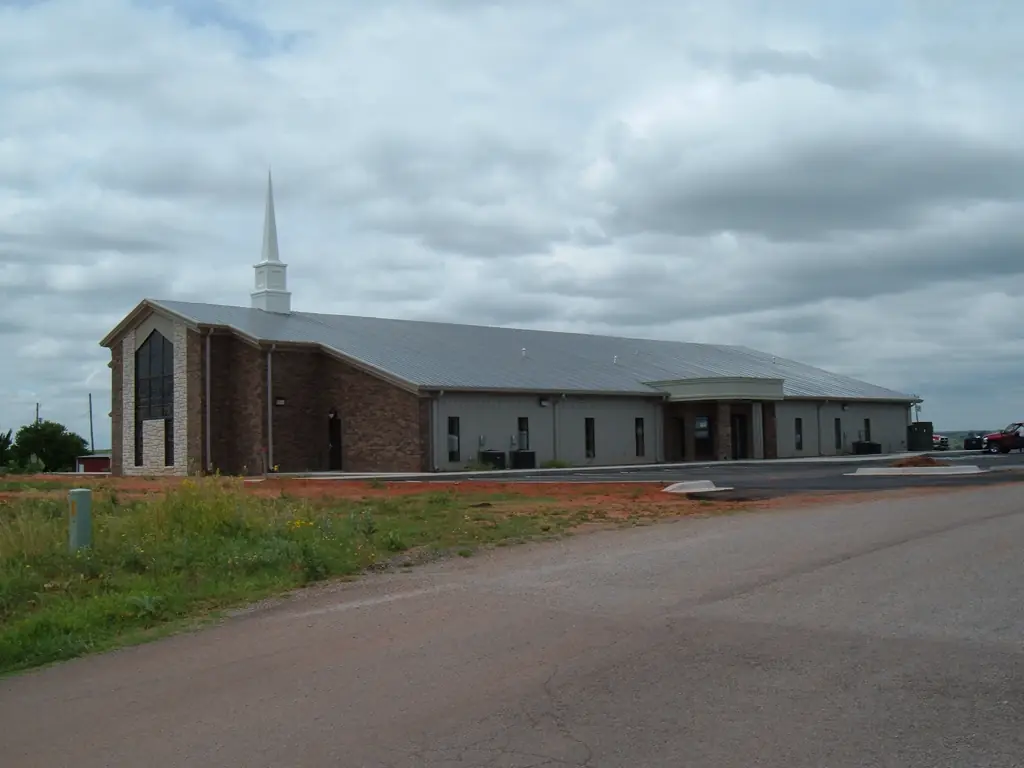
There is a version of construction where the site is empty, the fence goes up, and the crew works without thinking about anybody else. Most commercial work in a small town is not that. It is an addition onto a bank that has to open on Monday, a library that the public expects to be able to use, or a church that meets every week. The building keeps doing its job while it is being changed, and that constraint drives the sequence, the cost and most of the friction.
Start with what cannot stop
The first conversation is not about the addition. It is about the existing operation. Which doors have to work. Which hours have to be normal. Where the public has to be able to park. What noise is tolerable and when. For a bank the drive-through is usually non-negotiable. For a library it is often the entrance and the children's area. For a church it is Sunday morning and whatever midweek pattern the congregation runs on.
Write these down as constraints rather than preferences, because they will get traded against each other later and it helps to know which ones are real. An owner who says everything is essential will get a sequence built around the most expensive interpretation of that.
Separation is the main tool
The practical work of phasing is keeping the construction and the operation apart. That means a physical separation between the work area and the occupied building, a separate way for the crew and materials to get in, and a clear route for the public that never crosses the work. Temporary partitions do a lot of the heavy lifting here, along with dust and noise control at the boundary.
- A hard separation between the work zone and the occupied space
- A construction entrance and laydown area that does not use the public parking
- Clear signage for the public route, updated as the route changes
- Agreed timing for the loud and dusty operations
- A plan for the days when systems have to be tied in and something must be shut off
The tie-in is the hard part
An addition is only partly a new building. The difficult work is at the seam, where the new structure meets the existing one. Roofs have to join without creating a place for water to sit. Wall assemblies have to line up or transition deliberately. Heating, cooling, power and data have to connect to systems that were sized for the old building and may or may not have capacity for the new one.
This is also where surprises live. Older buildings are frequently not built the way their drawings say, if drawings survive at all. Opening a wall can reveal a structural condition nobody expected. A good sequence assumes some of this and leaves room to absorb it, rather than treating every discovery as a crisis.
Shutdowns should be scheduled, not improvised
At some point services have to be switched over, and that usually means something is off for a period. The difference between a well run job and a bad one is whether that outage is planned weeks ahead and communicated, or announced the morning it happens. Pick the quietest window the operation has. Tell everyone who will be affected. Have the work staged so the outage is as short as it can be, and have a fallback if it runs long.
What the owner should expect to do
Phased work asks something of the owner too. Somebody on your side needs to be reachable, needs to know the plan, and needs to warn staff and the public before disruptions rather than after. The projects that go smoothly are the ones where the owner treats communication as part of their job rather than the contractor's alone.
The finished building should not show any of this. Nobody walking into a completed addition can tell whether it was built around an operating business or on an empty lot. That is the standard. Sawatzky has built additions and phased work onto churches, banks and public buildings across western Oklahoma, including the First Baptist Church Addition in Weatherford, and the office is happy to walk through what a phased sequence would look like on your building.
Sawatzky Construction · (580) 772-5563
Call (580) 772-5563More articles
Design/build or design-bid-build: which one actually fits a small-town project
One contract or two is the first real decision on any building project, and it changes who is answerable when the drawings and the building disagree.
What a church building committee should settle before the first drawing
Most church projects that go sideways did so before anyone drew a line, because the committee had not agreed on what it was actually building.